The Swiss Museum of Transport (Verkehrshaus der Schweiz) in Lucerne is Switzerland’s most visited museum and one of Europe’s leading centers for mobility, transport, technology, and innovation. As a member of the International Association of Transport and Communications Museums (IATM), it is one of the very few museums worldwide to bring together all forms of mobility under one roof—from railways and road transport to aviation, maritime transport, and space travel. The museum serves as a platform for exploring the past, present, and future of mobility and its relationship with society.
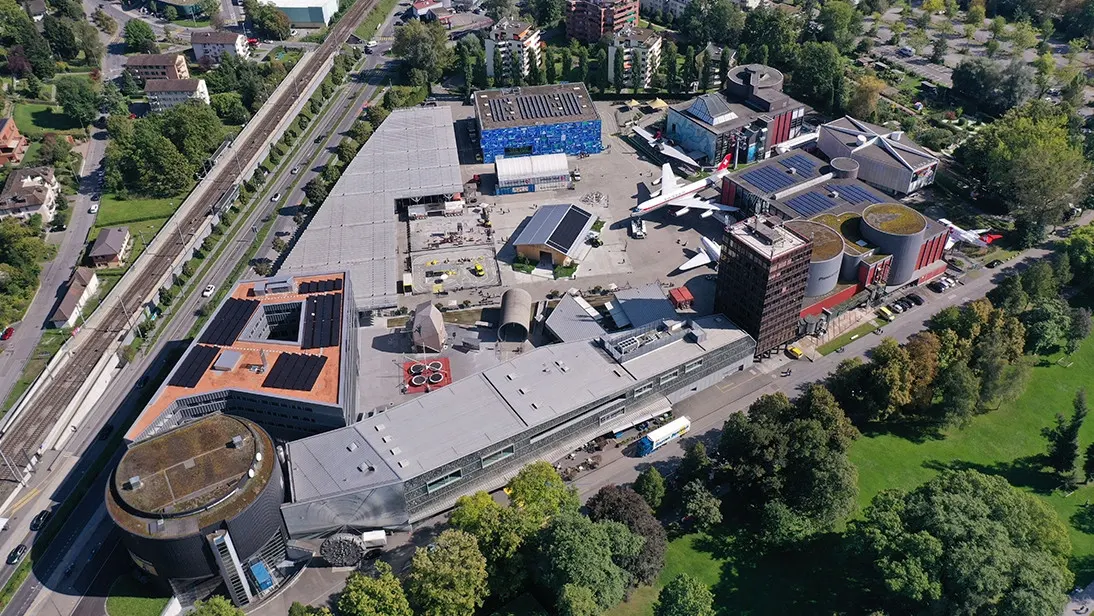
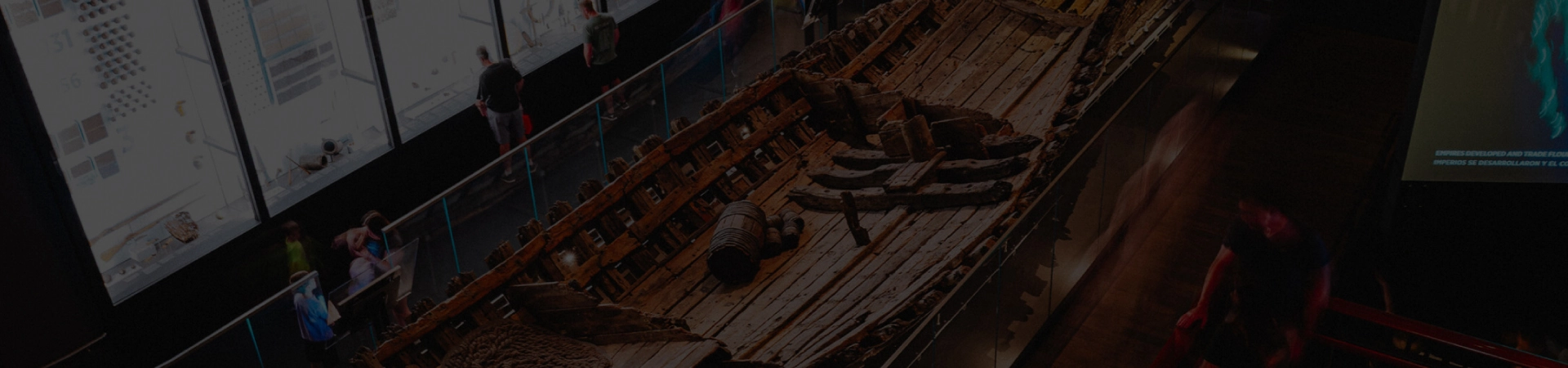
Across six buildings and approximately 20,000 square meters of exhibition space, visitors encounter historic trains, railway wagons, cars, motorcycles, aircraft, helicopters, and other original objects. The museum also features a planetarium and a large-format cinema. With around one million admissions annually, it attracts families, tourists, enthusiasts, and school groups of all ages, interests, and backgrounds. At the heart of the museum’s approach is the concept of “edutainment”—creating experiences that are entertaining enough to draw visitors in while giving them something meaningful to take away. As Foteini Salveridou, Head of the Creative Lab, explains, the museum aims to make complex subjects accessible and engaging through interactive experiences that encourage visitors to explore, experiment, and discover. “We are trying somehow to combine history with technology,” adds Bruno Arnold, Senior Digital & AV Developer of the Creative Lab. The goal is not simply to introduce digital elements into exhibitions, but to connect historical objects with new forms of interaction, making information more approachable and relevant to a diverse audience.
As a private, nonprofit association that finances around 85% of its operations through admissions, memberships, partners, and donors, the museum also faces the ongoing challenge of keeping its exhibitions relevant, well maintained, and appealing to returning visitors.
The museum’s Creative Lab brings together scenographers, digital developers, and graphic designers who work closely with curators and specialists from all the museum’s departments. This mix of expertise is a strength, but it also presents a challenge: exhibition technology must accommodate different perspectives, needs, and workflows while enabling everyone to collaborate effectively. Curators and research partners define the content and narrative, designers shape the spatial and visual experience, and digital developers transform these ideas into engaging and reliable interactions for visitors.
Language adds another layer of complexity. The museum must support three of Switzerland’s national languages—German, French, and Italian—plus English. Producing and updating exhibition texts and printed interpretive materials in four languages is neither flexible nor practical, particularly when exhibition content changes. Curators and content specialists need to be able to update text, media, and language-specific content without modifying the experience’s interactive logic. When a visitor selects a different language, the corresponding text, videos, and, where necessary, images must update automatically. This separation of content management from software development makes updates easier to handle throughout the lifespan of an exhibit.
The museum also needed a better alternative to its previous development model. In the past, many interactive installations were developed externally. The museum received a finished application but had limited insight into how it worked behind the scenes. As Bruno explains, the result could be a “black box”: whenever content or functionality needed to change, the team had to rely on the original supplier.
Game engines and custom development remain appropriate for highly complex 3D experiences, projection mapping, or game-based installations. However, they are not always the most practical solution for every quiz, timeline, or sensor-driven exhibit. With a limited number of dedicated programmers and a frequent need to update content, the Creative Lab needed greater flexibility and independence. Developing the right capabilities in-house was therefore essential.
The museum now uses Intuiface across a range of installations, including interactive timelines, quizzes, multimedia displays, and sensor-driven experiences. It has approximately 20 active installations across permanent and temporary exhibitions.
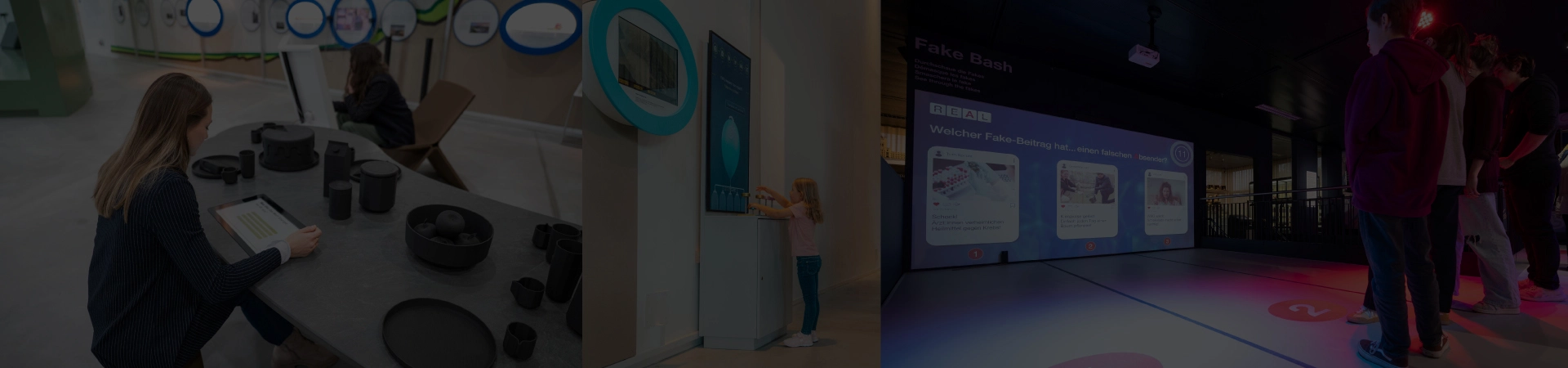
A particularly rich example is the “Emissions Explorer”, an exhibit created for the permanent exhibition “Experience Energy!” in collaboration with Swiss universities and research institutions. The project invites visitors to consider their personal CO₂ footprint through a series of questions. Rather than presenting the activity as a conventional on-screen quiz, the Creative Lab designed it as a physical, shared experience.
Visitors answer questions by operating physical hand pumps. With each interaction, a digital balloon on screen grows larger, creating a visible representation of the cumulative CO₂ impact of their choices. At the end of the experience, the balloon bursts. Visitors see the event on screen, hear the effect, and feel a burst of air from a ventilation system.
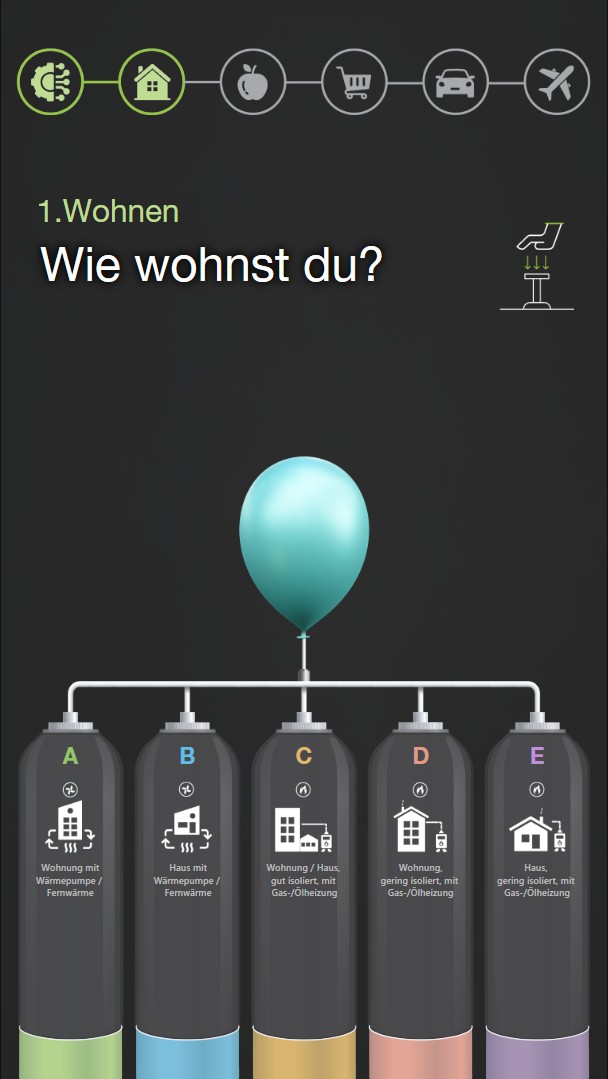
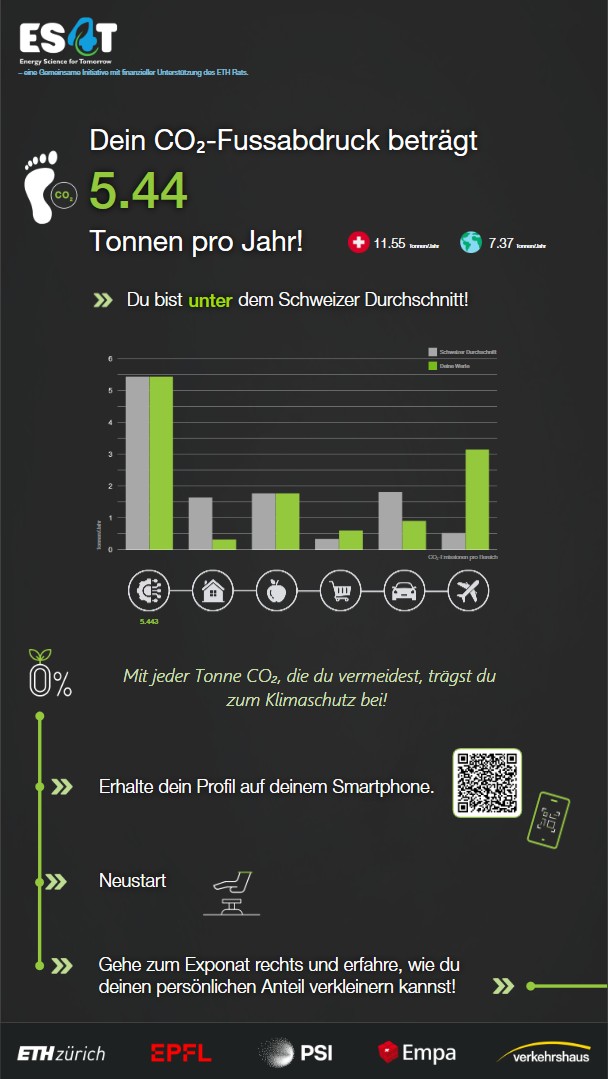
The installation combines several elements. Proximity sensors detect the activation of the physical pumps. Video and visual effects are coordinated in Intuiface. Google Charts generates real-time data visualizations for the final results. Anonymous answers are collected and shared with the project partners through Airtable. The exhibit therefore connects visitor input, physical hardware, digital media, live calculations, and partner reporting in one experience.
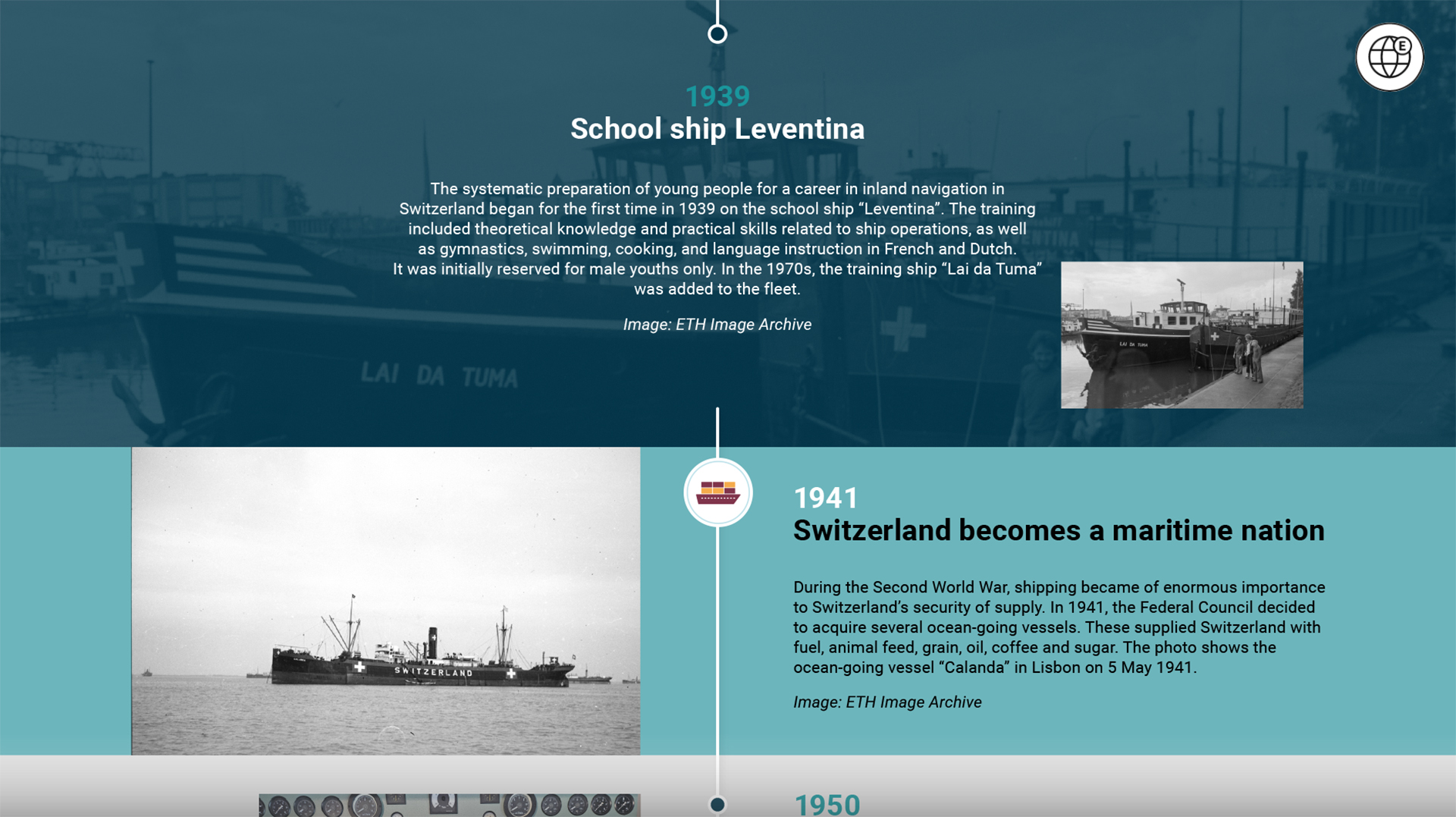
Beyond the Emissions Explorer, the museum uses Intuiface for multilingual interactive timelines, quizzes, and installations in its railway, Rhine port, communication, and energy exhibitions. One timeline invites visitors to swipe through the history of the Rhine ports, open images for a closer look, and view related videos. Its text and media update automatically when visitors select another language.
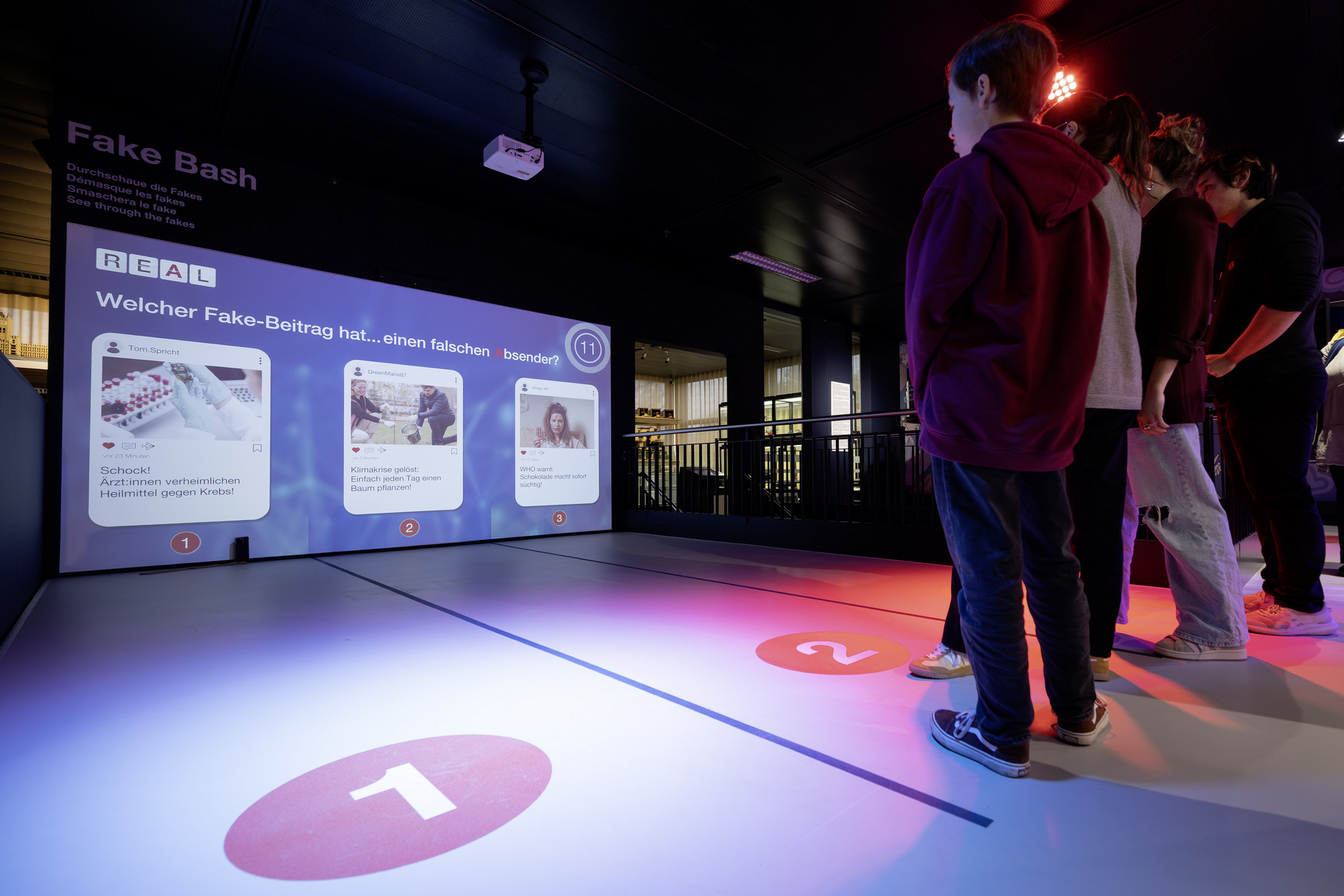
In an interactive quiz about “Fake News”, Intuiface coordinates projected social media posts with lighting, sound, physical buttons, and language selection, turning a simple question-and-answer format into a participatory group experience. The team also uses the platform for interactive tables and content displays that draw from Excel-based data, helping curators keep information up to date without altering the underlying experience.
For the Swiss Museum of Transport, Intuiface offers the flexibility of highly customized software development with the ease of use of basic media playback / no-code platforms.
The team can quickly prototype interactions and test how they work in the actual exhibition context. This is particularly valuable when a project brings together storytelling, spatial design, visitor behavior, and subject-matter expertise. Instead of discussing an idea abstractly for weeks, the team can build an early prototype, test it, and refine it together with curators, designers, and partners.
“We record around a million admissions every year, from people of all ages and with different interests and backgrounds. And we are constantly learning from them. We experiment and we are always looking for new ways to engage them.” says Foteini.
Intuiface also supports the kinds of interactive experiences that museums can offer beyond what visitors typically encounter at home. A touchscreen alone is familiar. But a touchscreen combined with physical pumps, large-scale projections, spatial audio, lighting, environmental effects and sensors creates a richer, more immersive museum experience. Intuiface’s open, no-code integration framework allows the team to bring these elements together while maintaining the flexibility to incorporate custom HTML, JavaScript, web APIs, and external services when needed.
The platform also lets the museum choose the right tool for each project. Simple content playback can still be handled by a standard media player. Intuiface is used where the museum needs adaptable interactive logic, regular updates, multiple languages, and integration with physical or data-driven components.
Bringing more of this work in-house has made the museum faster and more self-sufficient. The Creative Lab can update content without relying on external developers, respond to new requirements, and collaborate with partners with a better understanding of the technology involved. For larger projects, the museum still works with external specialists, but the team can properly define requirements, evaluate proposals, and maintain control over the creative vision and functionality of its exhibits.
Reliability is just as important as development speed. The museum is open 365 days a year, and its technical teams manage hundreds of screens and digital systems. An exhibit that requires frequent intervention can quickly become an operational challenge.
“If an experience runs every day without issues, that’s a good result,” says Bruno. The museum uses Windows-based, and other players that can shut down at night and automatically restart the application in the morning, helping exhibits operate reliably without requiring manual intervention.
The Swiss Museum of Transport has a range of projects planned for the coming years. The Creative Lab plans to continue developing digital experiences in-house, particularly for projects that require frequent content updates, close collaboration with curators and partners, multilingual content, sensor input, and synchronized sound and lighting.
As the museum continues to combine its historic collections with new forms of interaction, Intuiface is currently an important part of its toolkit, enabling the Creative Lab to create experiences that are engaging for visitors, easy to maintain and update, and reliable in the exhibition environment.