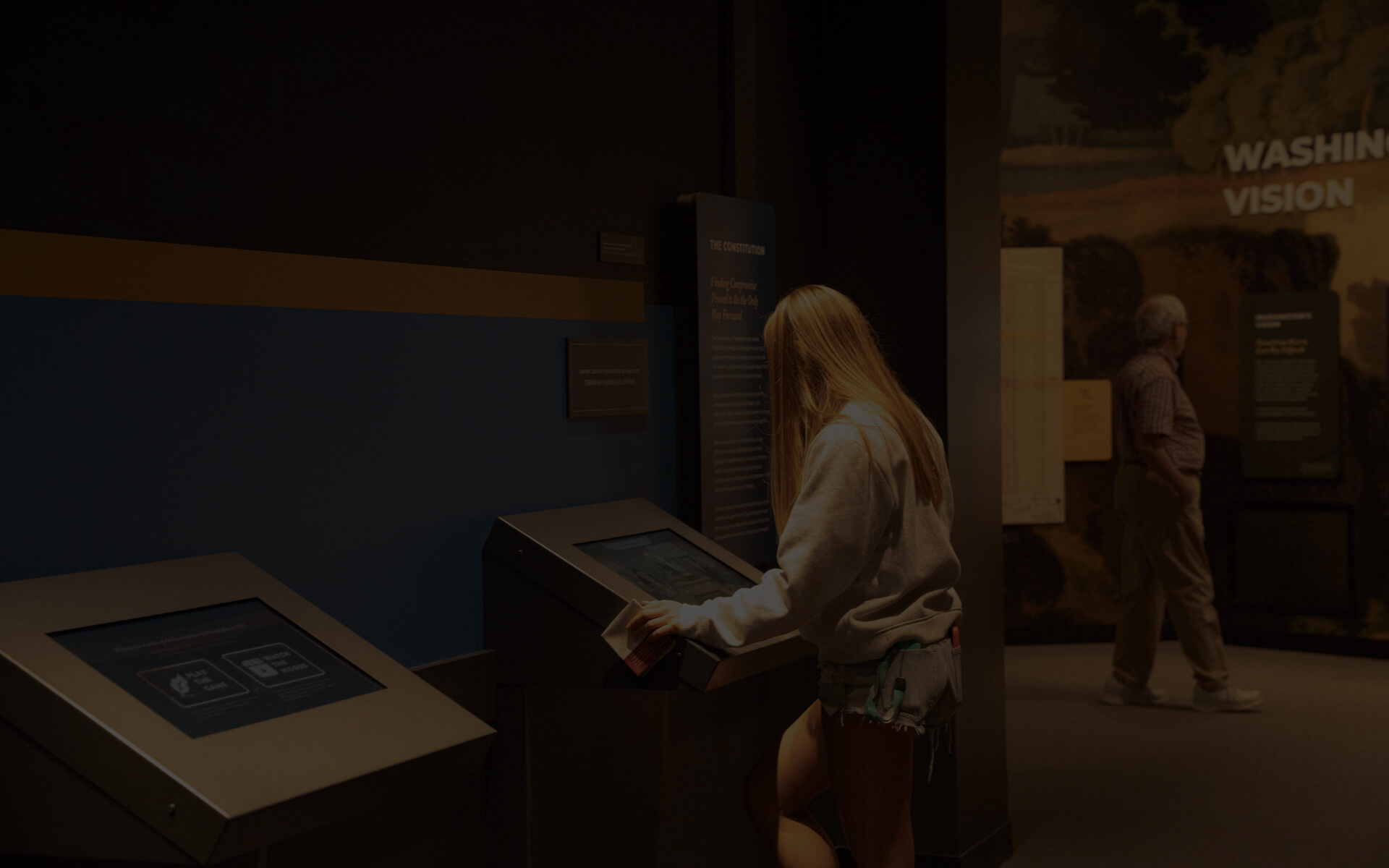
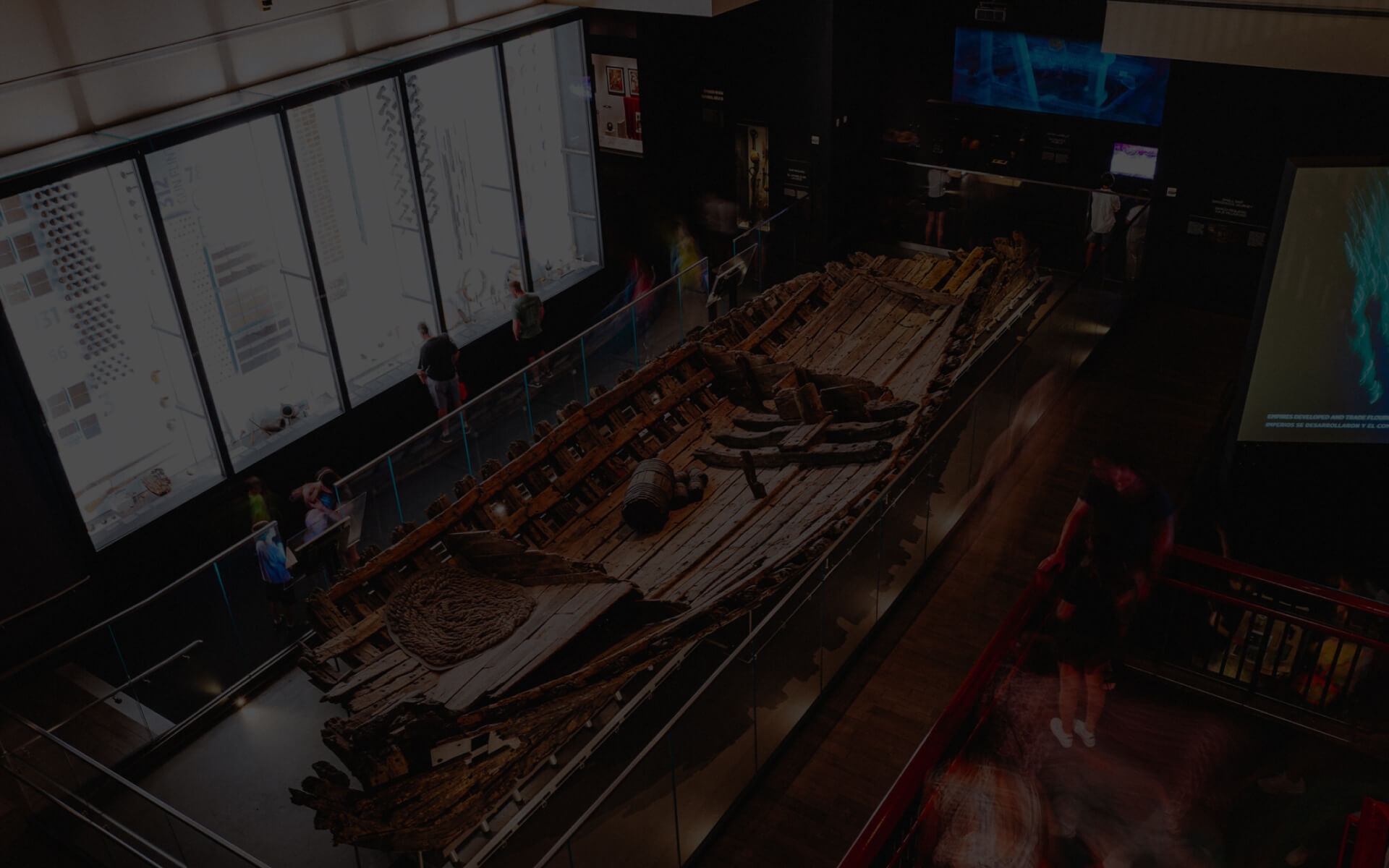
The Bullock Texas State History Museum is Texas's official history museum. Located on the Capitol Mall in Austin, it opened in 2001 and presents 16,000 years of Texas history across three floors. It also includes an IMAX® theater and the multisensory Texas Spirit Theater. More than 11 million people have visited its exhibitions, films, and programs.
The museum has three floors of core galleries along with special exhibitions that change about twice a year. The interactives expand on traditional gallery labels, while digital signage keeps visitor information current.
Intuiface first entered the museum before Mel Tamporello joined its staff. Her predecessor selected it to create a matching game about bison during the renovation of the first-floor core galleries. That first project showed the museum that its own digital staff could build an interactive without a software developer. Its use then grew project by project, including reconstructing an aging interactive about the historical figures depicted in a painting by Henry McArdle.
This addressed a longstanding challenge. The museum had no back-end developer, so they typically had to outsource custom development for complex interactives. While interactives built in-house on other platforms, such as BrightSign, were maintainable for staff, the software had major limitations.
Digital signage became the next area of concern. The museum’s original Scala-based system relied on a physical server, dedicated network cabling, and one authoring license. A single employee had to update dynamic content throughout the museum, and adding screens or responding to a sold-out show and changing concession items were cumbersome. When that system failed, and the museum wanted to expand its signage, the team decided to reevaluate alternative software options and chose to extend a platform it already knew: Intuiface.
What began with one exhibit grew into a collection of long-term and temporary experiences.
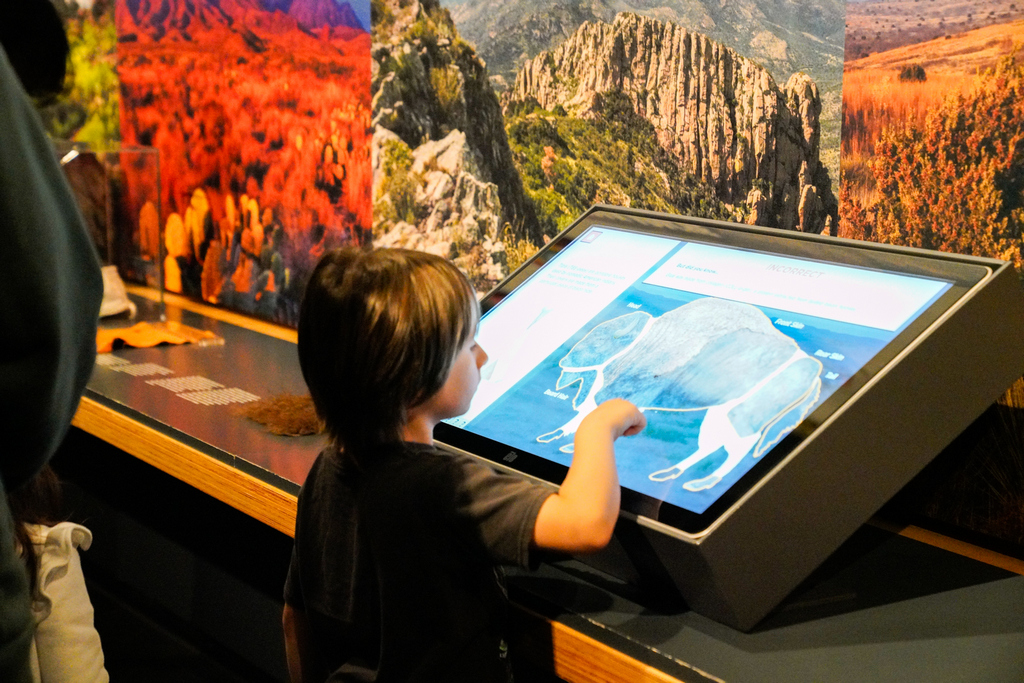
The bison matching game is a digital interactive that teaches how every part of the animal was used in Native American life and culture. Visitors select parts of an illustrated bison and match each one to its purpose, receiving hints after incorrect choices.
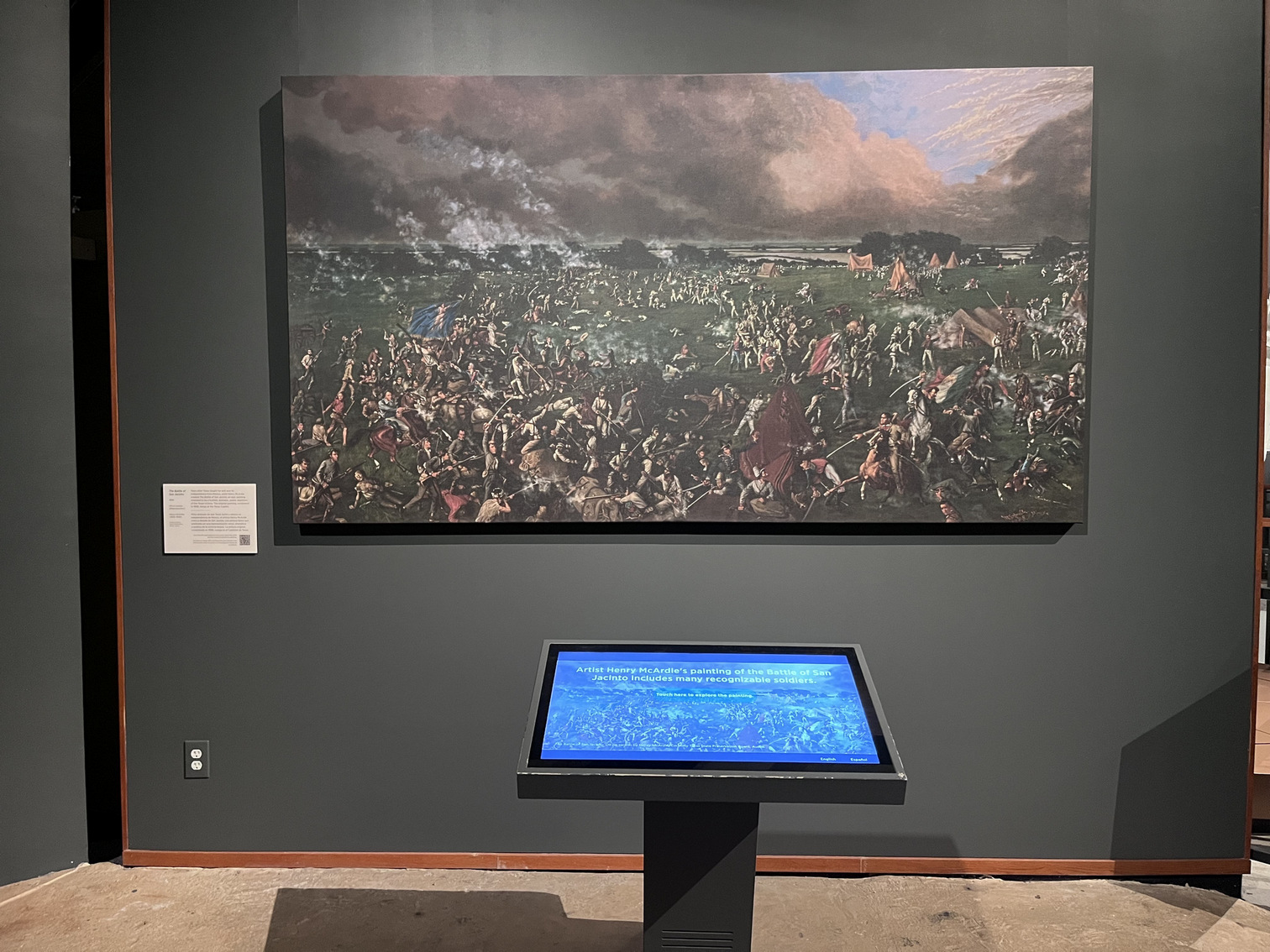
The McArdle interactive explores Henry McArdle’s painting, “Dawn of the Alamo”. Selecting historical figures reveals who they are and why they matter. The first iteration was built in IntuiFace but was rebuilt for a new museum display and with the added ability to let visitors switch between English and Spanish without losing progress.
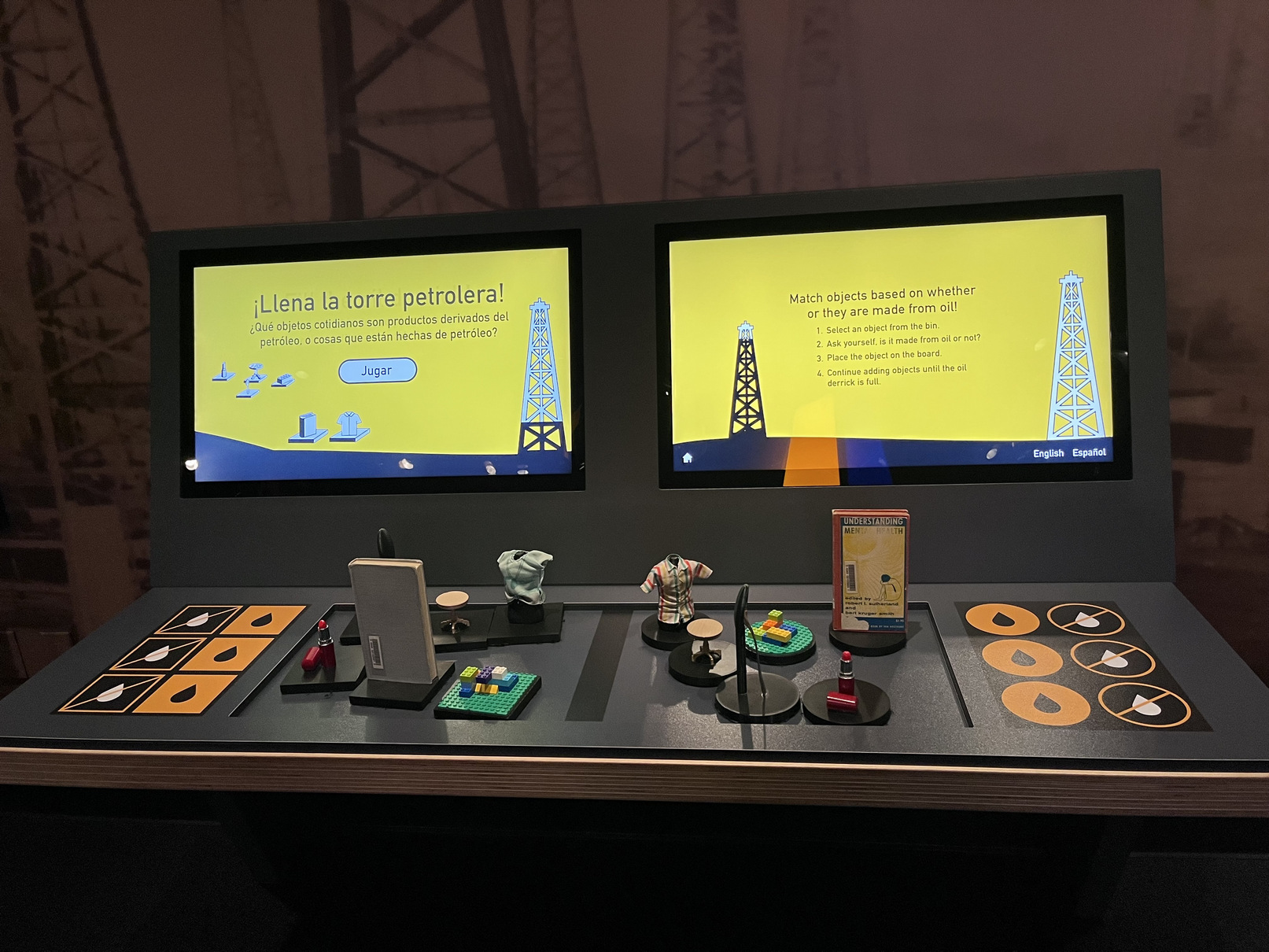
An experience about petroleum in modern products moves beyond touch-only interaction. Visitors place objects—including a polyester shirt—on RFID readers and decide whether each is made from petroleum. Intuiface connects the tagged objects to on-screen feedback and a progress indicator shaped like an oil derrick.
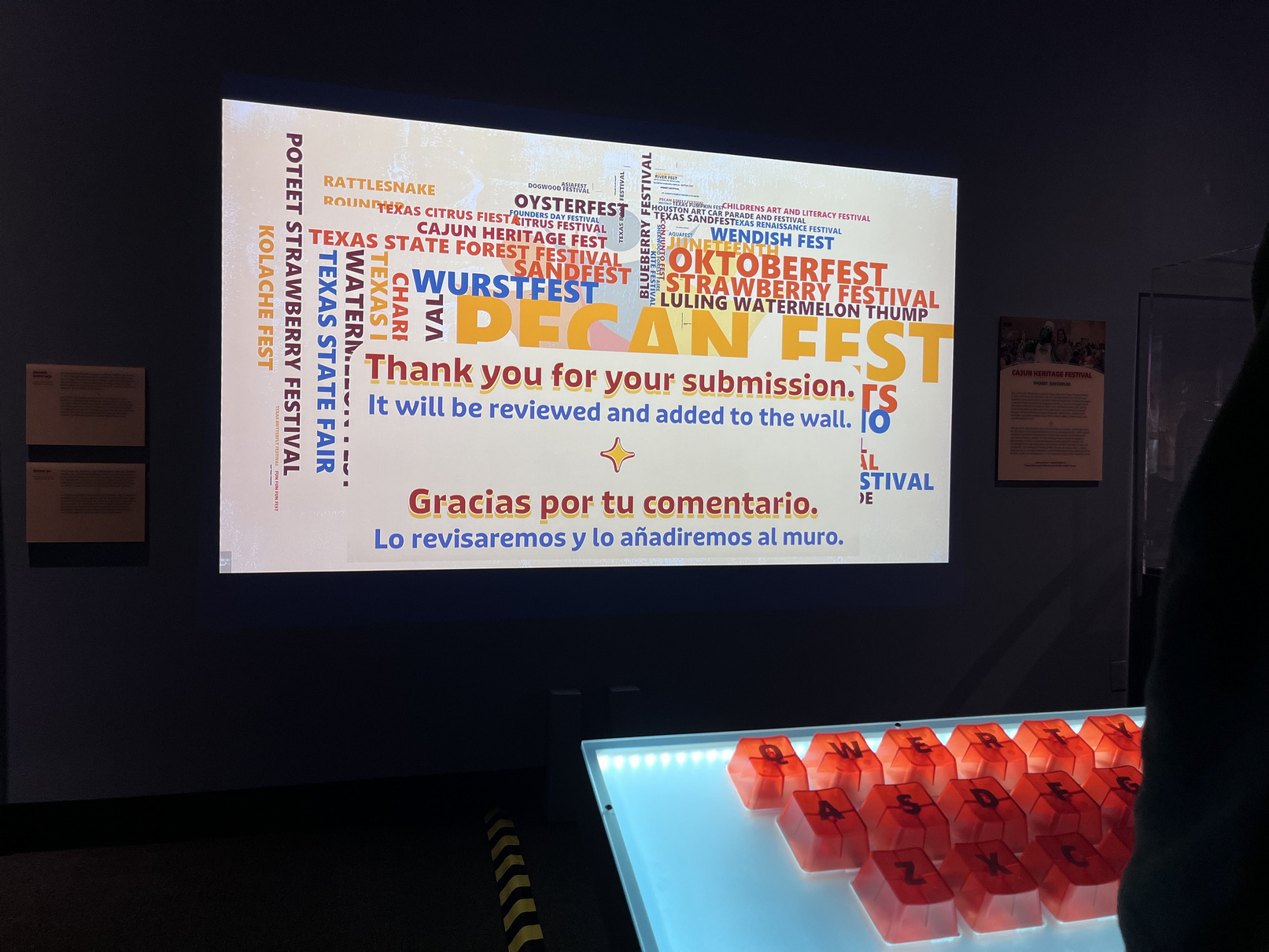
For a special exhibition about Texas festivals, visitors enter responses using an oversized physical keyboard. A spreadsheet captures the submissions for a word cloud; frequently submitted terms grow larger on screen.
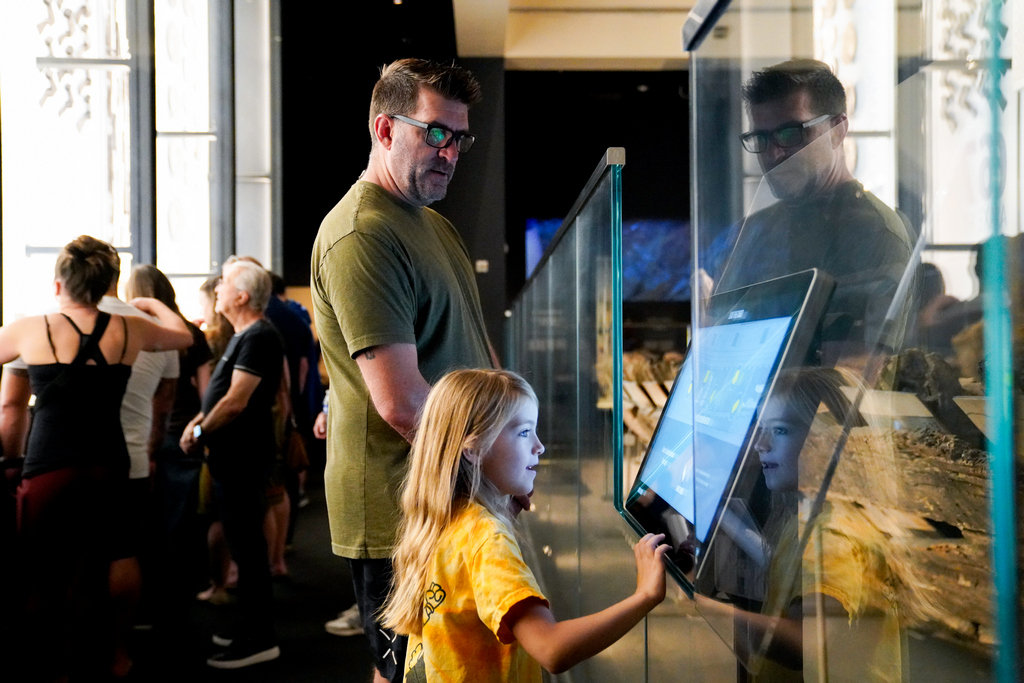
Two connected games focus on La Belle, the French colonial shipwreck displayed at the museum. Visitors identify recovered cargo and choose supplies for an expedition.
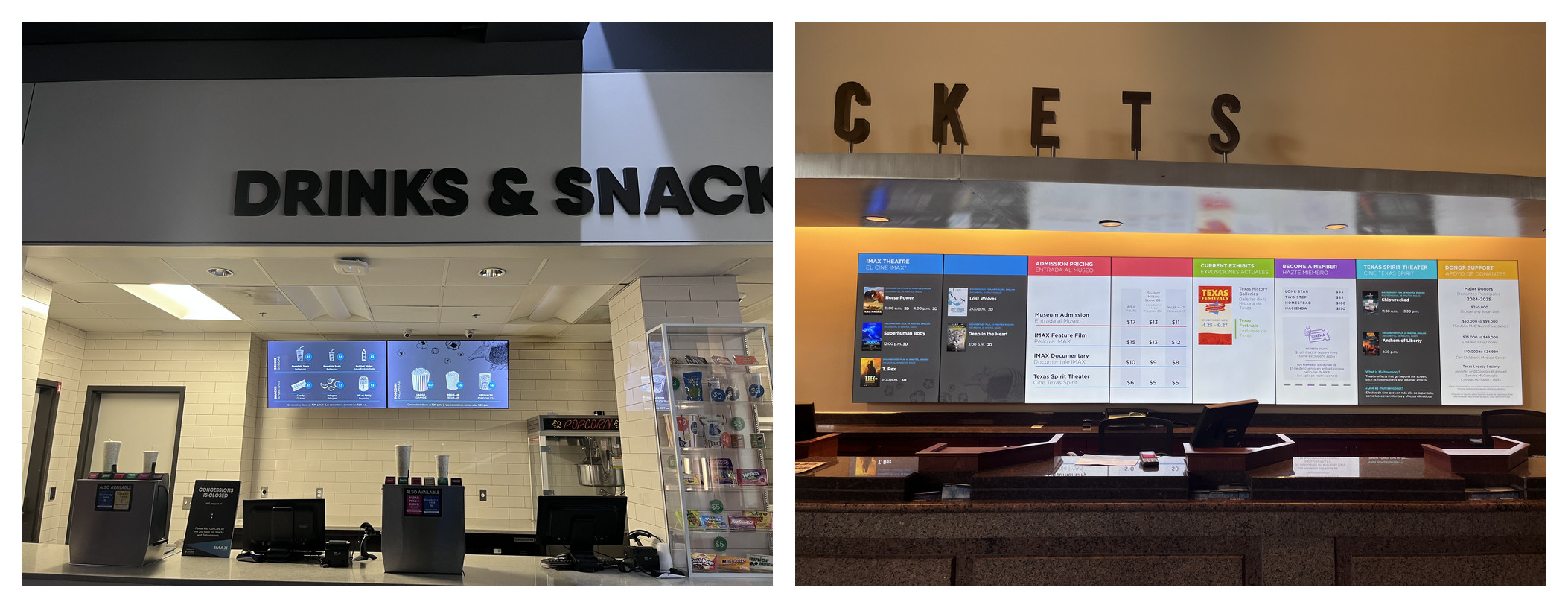
Beyond gallery interactives, Intuiface now drives four digital-signage installations spanning 12 screens: an eight-screen visitor-services ticketing wall, a two-screen IMAX concessions display, another IMAX display, and a Texas Spirit Theater display.
Intuiface brought work that once required multiple tools into one system the museum could operate itself. Intuiface lets staff prototype, test, revise, and deploy without hard coding, while supporting language switching, RFID input, custom controls, spreadsheets, content feeds, and analytics.
“It was very easy to learn how to make and maintain these experiences,” said Pete Martinez, AV Exhibit Technician. “It makes a lot of sense when you’re trying to create something visually and make it look nice without having to get into hard coding.”
For signage, the Intuiface Headless CMS and tiered user roles removed the single-person bottleneck. Six visitor services coordinators can update schedules, exhibition information, concession prices, and images in advance or as conditions change. The digital team no longer makes every routine edit.
“For us, it works in our budget, it works with the staff that we have, and it’s easy to learn,” said Mel Tamporello, Head of Web and Digital Media.
Documentation, webinars, community knowledge, and direct support have helped the team take on complex work. When the museum encountered a difficult BrightSign integration issue, Intuiface worked with the hardware vendor. Tamporello said, “If [Intuiface] hadn’t stepped in, we may never have gotten as far as we did.”
The museum can now create and maintain a varied digital program with its existing staff. Staff test interactives on the gallery floor, use visitor feedback and analytics to refine them, deploy interactives remotely, and can assign signage changes to the people closest to the information.
The results are digital signage with accurate, up-to-date information about museum and theater experiences and expanded learning through digital interactives that engage both children and adults.
The Bullock Museum plans to keep exploring experiences that combine physical and digital interaction. Future hardware projects will require alternatives to the RFID readers used in the petroleum exhibit.
The team is also considering web delivery and ways to make digital interactives more accessible. Potential directions include external controllers and input methods that do not depend entirely on a touchscreen. Its in-house approach will let the museum test these ideas with visitors before applying them to future exhibitions.