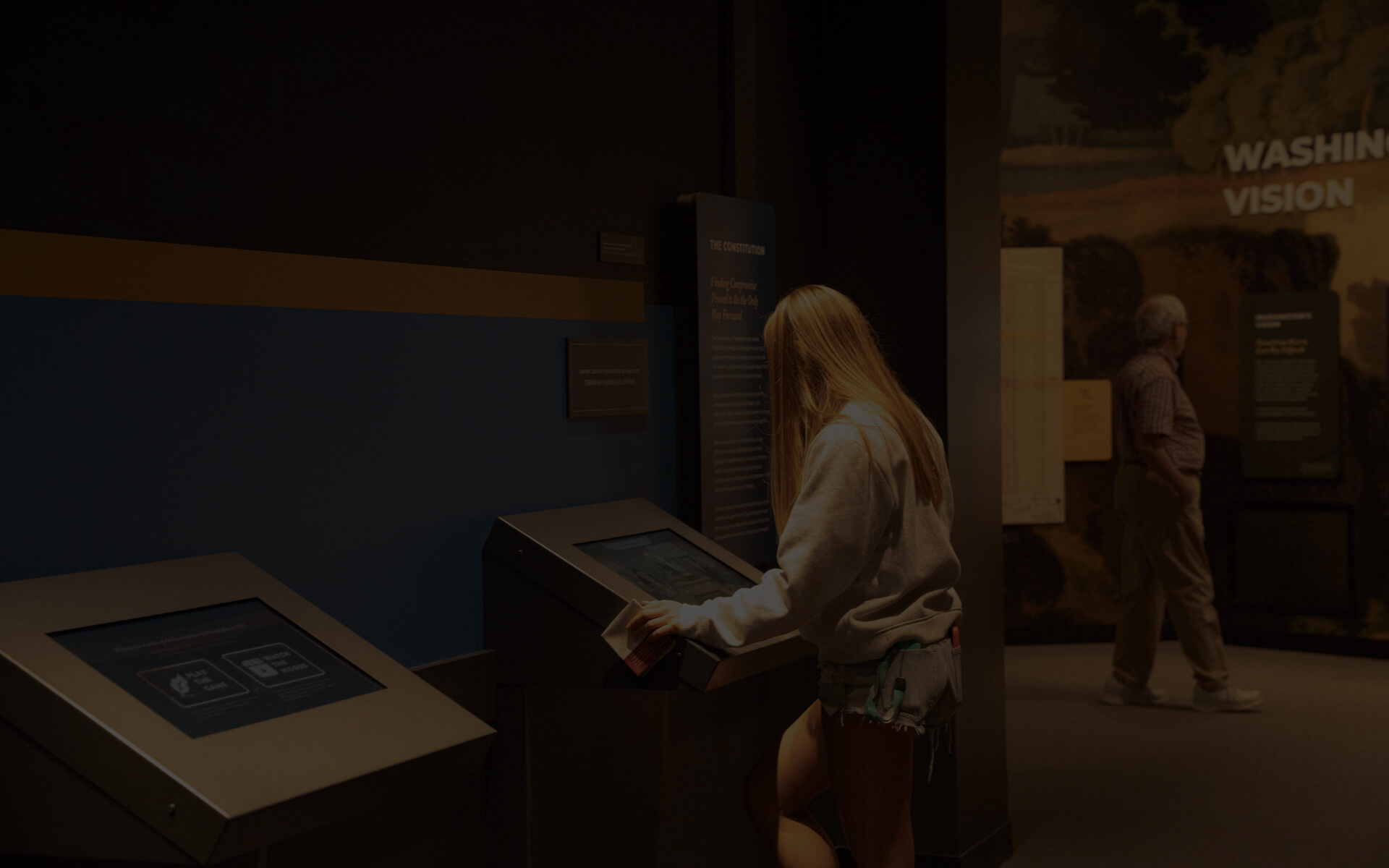
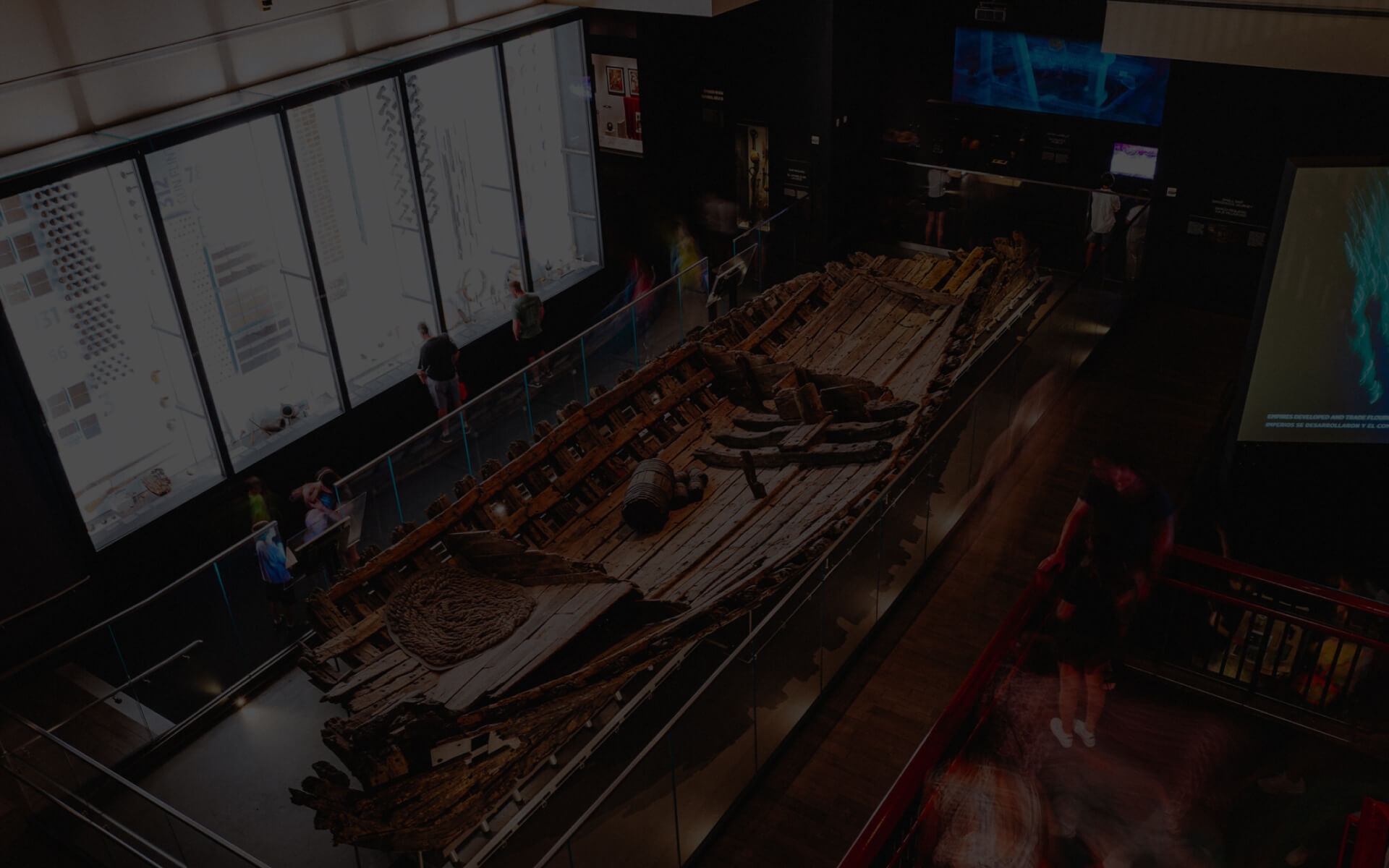
Located 15 miles south of Washington, D.C., Mount Vernon was the home of George and Martha Washington. The estate is now open to the public and includes the Mansion, gardens, and farm; the Museum and Education Center; and the George Washington Presidential Library.
Mount Vernon is owned and operated by the Mount Vernon Ladies’ Association, a private nonprofit that accepts no government funding. Founded by Ann Pamela Cunningham in 1855, the Association acquired the property from the Washington family in 1858 and is recognized as the oldest national historic preservation organization in the United States.
In June 2026, Mount Vernon opened a new $20 million Education Center designed to present a fuller account of Washington’s life, decisions, accomplishments, and failures ahead of America’s 250th anniversary.
Mount Vernon’s first challenge was continuity. A small external company had created and maintained nine image-based interactives in its museum, but it was going out of business. The museum needed to replace those applications without becoming dependent on another outside developer.
The organization also had limited internal resources. IT Director Bert Oltmans manages the estate’s technology while overseeing projects involving retail, HR, document management, and other systems. Mount Vernon did not have an in-house team of interactive or game developers.
Historical accuracy created another challenge. Curators and educators closely review everything from crop values to the appearance of a lamp in a graphic. With each review, the creative team must be able to change text, images, rules, and visual details without commissioning another development project.
Finally, the Education Center’s ambitions grew well beyond the straightforward image-browsing experiences for which Intuiface was initially selected. The new concepts incorporated games, maps, videos, physical controls, and experiences that could eventually run both inside Mount Vernon and on their website.
The team began by rebuilding the nine existing museum interactives using Intuiface. These applications, including an exhibit about the Mount Vernon Ladies’ Association, run on Chromeboxes and let visitors explore image-rich historical content.
For the Education Center, Mount Vernon created six new interactive experiences. Among them:
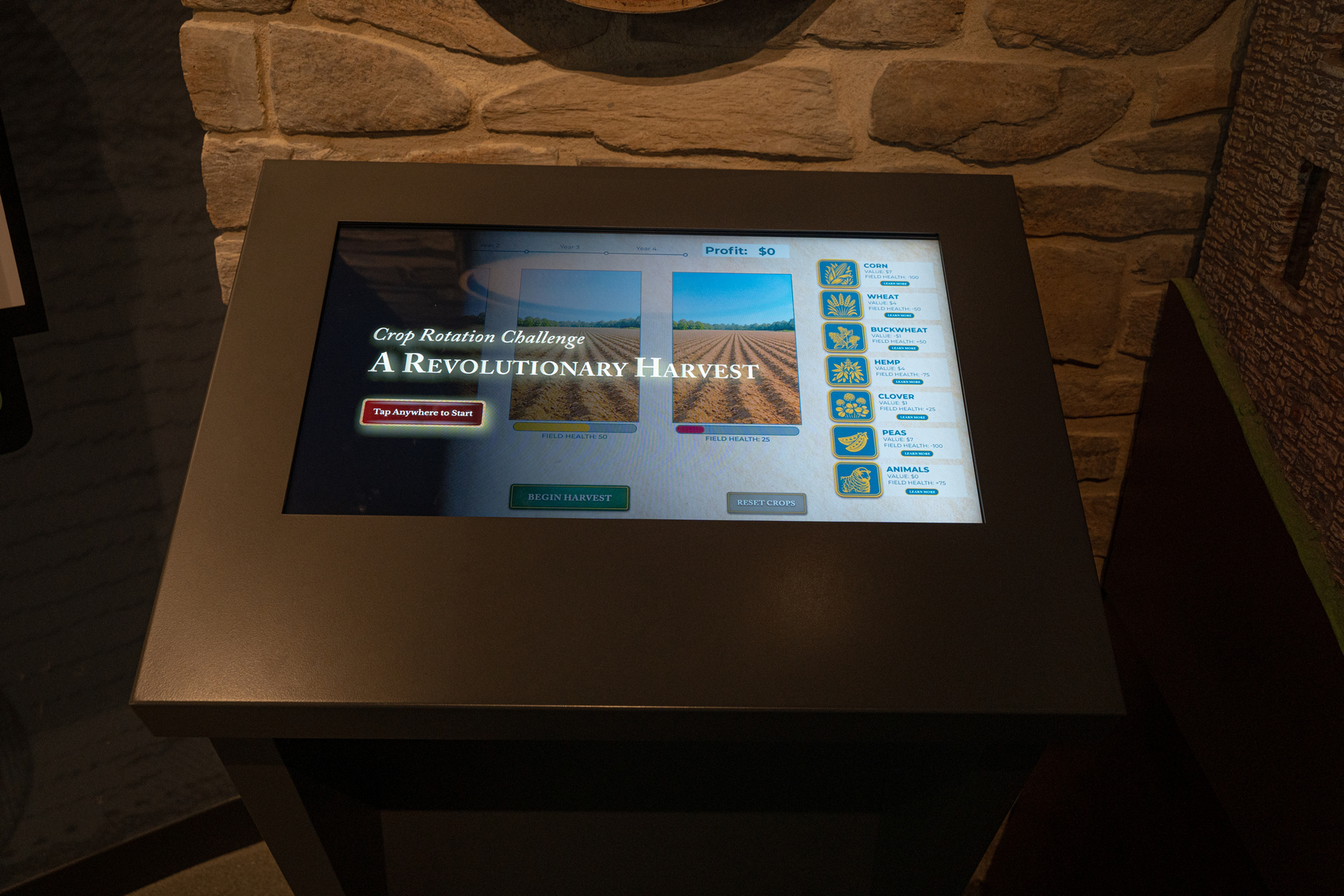
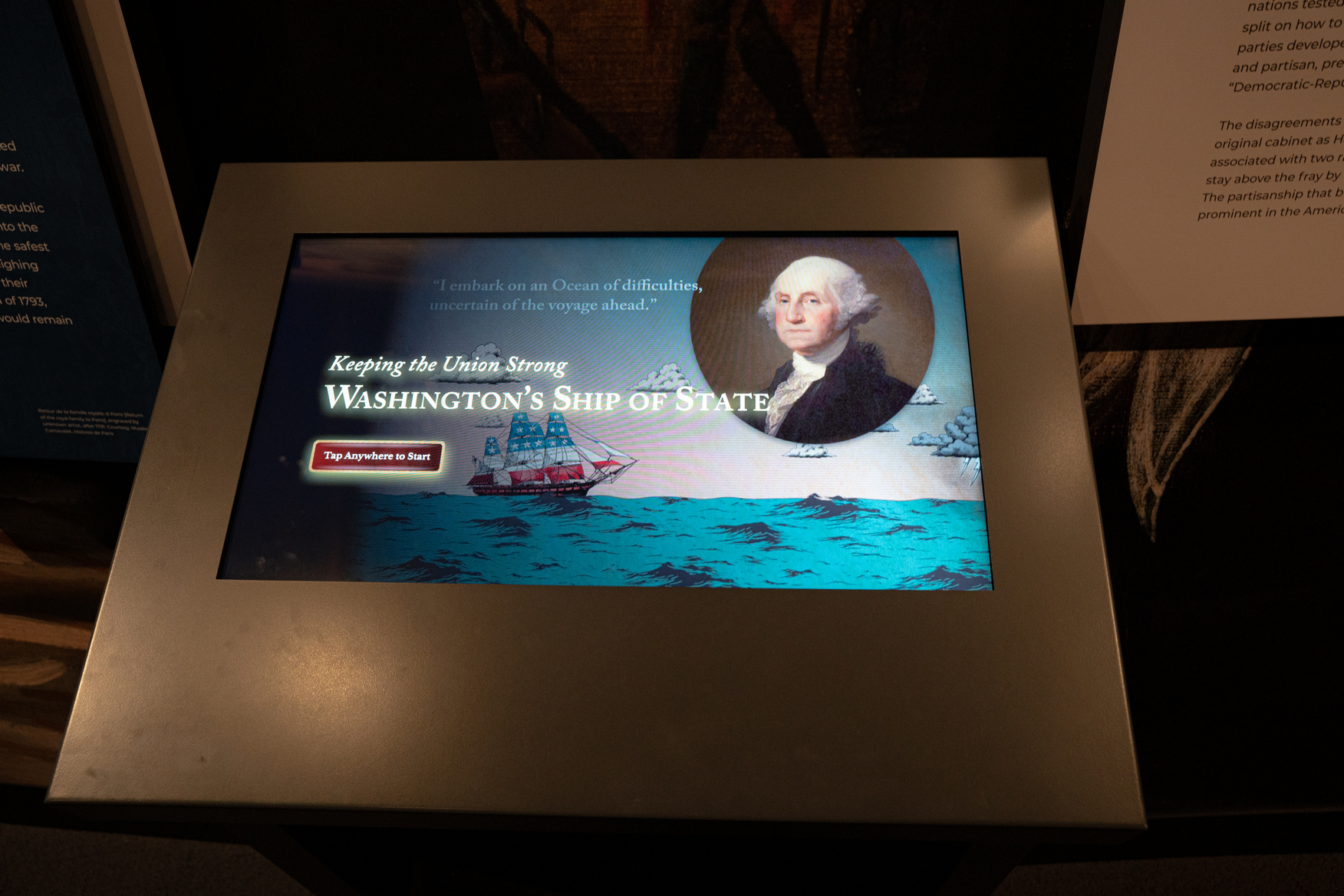
Two additional Intuiface projects are in development. One presents 12 historical maps and accompanying videos on a large non-touch display controlled by physical buttons. The other is an espionage game set in Revolutionary-era New York. Players navigate a historical map, visit locations, decipher codes, gather a message, evade the British, and deliver the intelligence to Washington. The game will run on two kiosks.
Intuiface gave Mount Vernon a way to own its interactives without hiring a development team. Oltmans learned the platform himself, and a high school student hired for the summer contributed substantially to the applications.
“We don’t really have anybody in the organization who can build interactives. As the IT director, I have to do most of the heavy lifting. But Intuiface was easy enough for me to pick up and do it.”
The same platform supports simple image collections, multilayered games, interactive maps, videos, cloud deployment, and integrations with physical controls. That range became important as the Education Center team proposed increasingly ambitious ideas.
“The tool behind it is so flexible that we always said, ‘Yes, we can do that.’”
Intuiface’s support and consulting also helped the team move beyond what it initially knew how to build. Through support tickets, working examples, videos, downloadable experiences, and guidance from Intuiface experts, Mount Vernon could learn from completed solutions rather than simply receive instructions.
“I’ve never really had a help desk that goes as far as Intuiface’s goes. I get something back that works, and I think, ‘Oh, that’s how you do it.’”
Mount Vernon now has 15 live Intuiface experiences: nine in the museum and six in the Education Center. With the two projects currently in development, the total will reach 17.
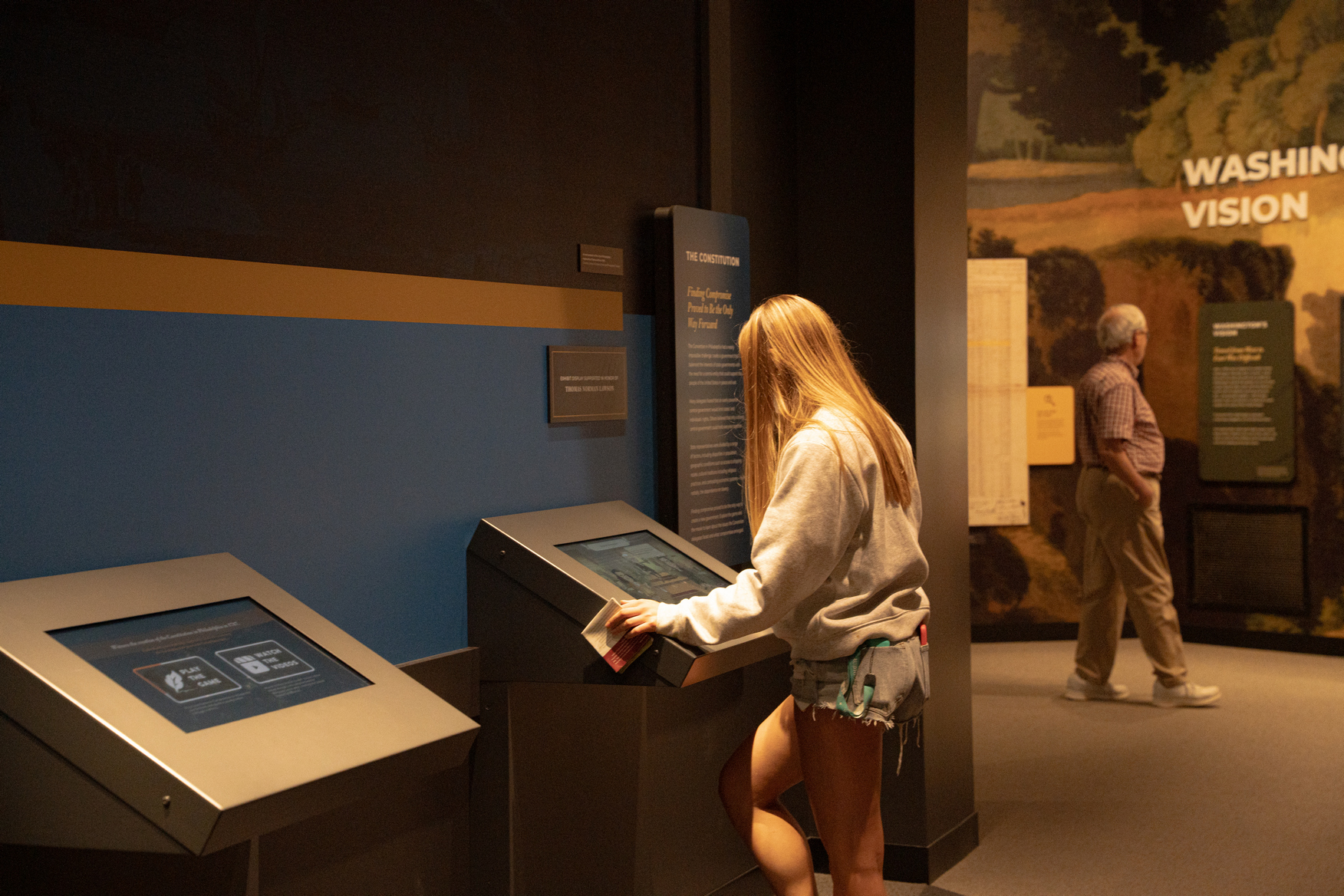
The original rebuilt museum applications have proven very reliable, running without incident, while the Education Center projects show that the same internal team can produce far more complex experiences. Just as importantly, Mount Vernon can respond directly to curatorial feedback, correct historical details, and refine game mechanics without returning to an external developer for every change.
The immediate priority is completing the historical-map experience and spy game in the Education Center. The team is also developing a mobile-friendly experience based on Washington’s “Rules of Civility,” allowing players to switch between the original eighteenth-century wording and a modern interpretation.
Mount Vernon plans to make selected interactives available through its website and share them with classrooms for use on students’ own devices. The team also expects to add Intuiface analytics, giving educators insight into the screens visitors explore, the choices they make, and where future adjustments could improve the experience.