The Banner Ad Already Showed Us How This Ends
Digital signage is repeating one of digital advertising’s biggest mistakes: measuring whether content was delivered rather than whether anyone cared. The decline of the banner ad shows why organizations must move beyond proof of play and design interactive, relevant, and measurable experiences that give audiences a reason to engage
This article is the third in a series by Intuiface CEO Mathieu Yerle. Subscribe to his Substack, Screen Heresy, for early access to his latest posts.
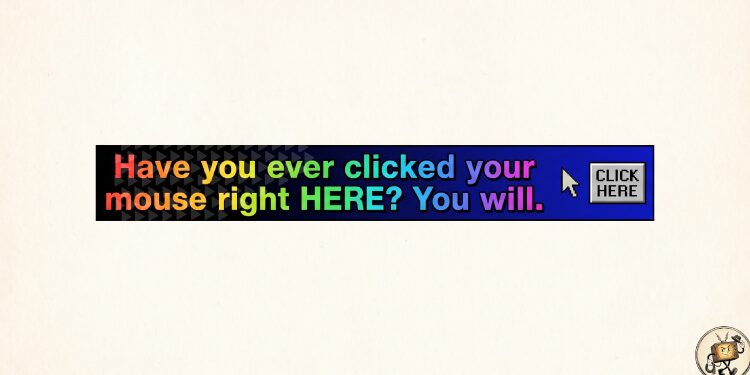
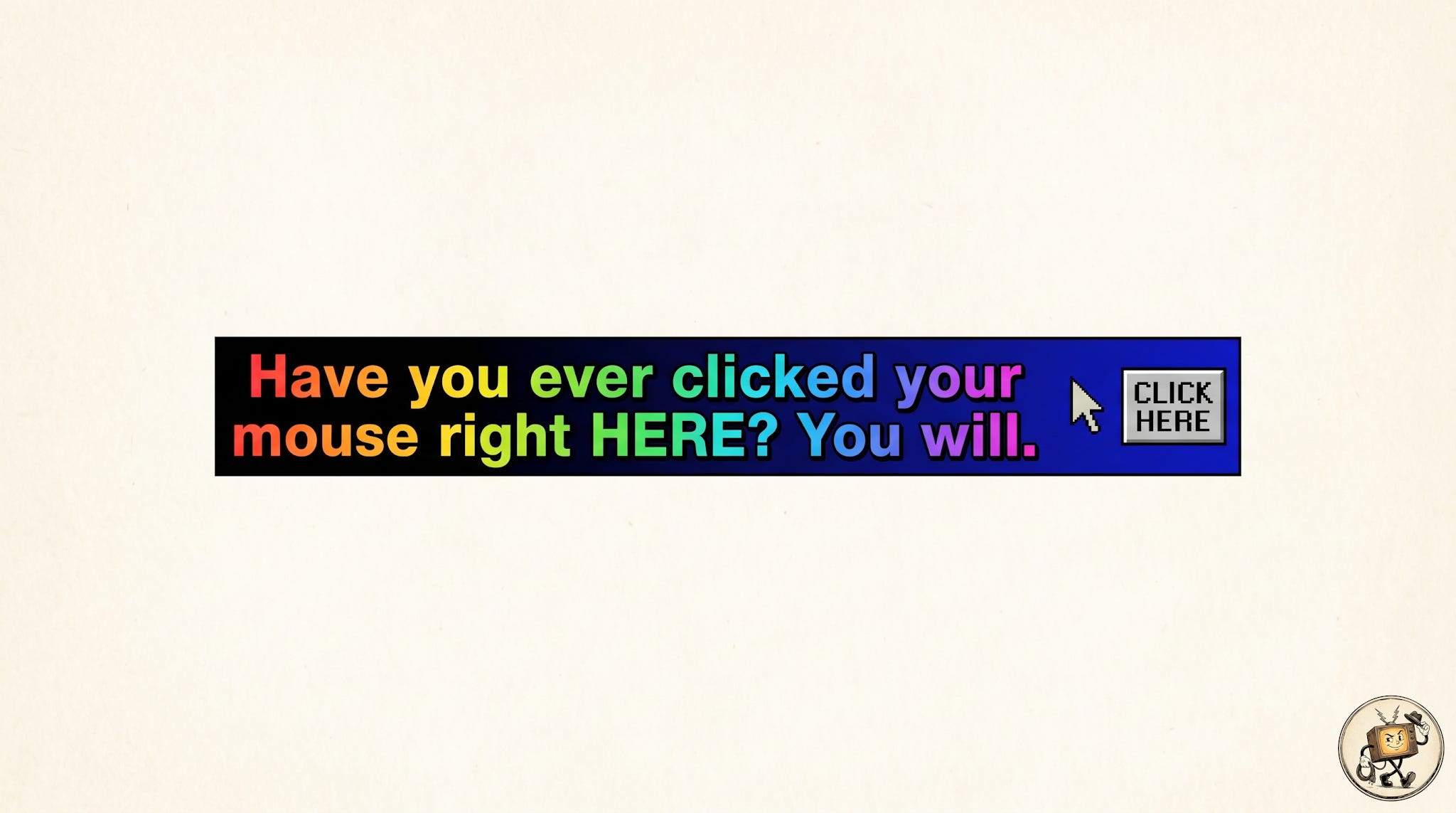
On October 27, 1994, AT&T paid $30,000 to place a small rectangular graphic at the top of HotWired.com. It read: “Have you ever clicked your mouse right here? You will.”
44% of people who saw it clicked.
That was the first banner ad. And for a brief moment, it worked brilliantly. It was novel. It was curious. It invited action. Nearly half the audience engaged with it.
Thirty years later, the average click-through rate on a display banner ad is 0.05%. Five clicks per ten thousand impressions. You are statistically more likely to survive a plane crash than to click on a banner ad.
What happened between 44% and 0.05% is one of the most instructive stories in modern marketing. And the digital signage industry is repeating it almost move for move.
How an industry optimized itself into irrelevance
The banner ad didn’t die because audiences changed. Audiences were always going to adapt. It died because the industry responded to declining attention by doing more of the same, harder.
When click-through rates started falling, the response wasn’t to rethink the model. It was to increase volume. More ads. More impressions. More frequency. If 1% of people click, show it to a hundred times more people. The math still works, right?
It didn’t. Audiences developed what researchers now call “banner blindness” - the learned ability to visually filter out anything that looks like an ad. Studies1 show that most people don’t even register banner ads on a page anymore. Their eyes skip over them the way you skip over the safety card in an airplane seat pocket. It’s not that the content is bad. It’s that the format itself has been trained out of consciousness.
The industry’s next move was worse: make the ads harder to ignore. Pop-ups. Auto-play video. Ads that expand when you scroll past them. Interstitials that block the content until you find the tiny X button. Every escalation drove more people to install ad blockers, which now run on roughly a quarter of all browsers worldwide.
The banner ad industry spent three decades optimizing for impressions - a metric that measures whether an ad was served, not whether anyone cared. Sound familiar?
Proof of play is the impression metric of physical spaces
Here’s where this story walks into a hotel lobby.
The dominant metric in digital signage is “proof of play.” Did the content run? Yes. Did it display at the scheduled time on the correct screen? Yes. Did anyone look at it, think about it, or change their behavior because of it? Unknown.
Proof of play is the impression metric. It measures delivery, not impact. And just like impressions in digital advertising, it creates a perverse incentive: as long as the content played, the job is done. Whether anyone engaged is somebody else’s problem.
The parallels go further. When signage doesn’t perform, the instinct is the same as it was with banner ads - do more of the same. Add more screens. Run more content. Increase the rotation frequency. If nobody’s looking at the video wall, make it bigger. If the lobby screen isn’t working, add a second one.
Nobody stops to ask: is the model itself the problem?
Your audience has already adapted
Walk through any airport, shopping mall, corporate lobby. Watch what people do when they pass a digital screen. Most of them don’t look. They’ve developed the physical-space equivalent of banner blindness. Not a separate instinct - the same one, generalized. The reflex that learned to skip the banner ad online doesn’t switch off when someone walks through a lobby. They have learned - through years of experience with irrelevant, untargeted, broadcast content - that the screen has nothing to say to them. So they tune it out.
This is the same adaptation that killed the banner ad. And it happened for the same reason. The format trained the audience to ignore it.
In my first post, I wrote that most screens have nothing to say. This is why. It’s not that the content is bad. It’s that years of passive, one-way broadcast have taught audiences that screens in physical spaces aren’t worth their attention. The format has been devalued by its own model.
What digital advertising learned (eventually)
The digital advertising industry did eventually find a way forward.
The shift was toward formats that earned attention instead of demanding it. Sponsored content that read like the publications it ran in - the model that built BuzzFeed and now powers most of what you see on LinkedIn. Search ads that answered a question the user was already asking, the foundation of Google’s entire business. Interactive formats - quizzes, configurators, calculators - that gave the user something to do. Personalization that made the message relevant to the individual instead of broadcasting to the crowd. And critically - measurement that tracked engagement, not just exposure.
The transition took years. It was messy. Many companies that had built their entire business model around impressions and display ads struggled to adapt. But the ones that made the shift discovered something powerful. When you give people content that’s actually relevant to them, in a format that respects their agency, engagement goes up dramatically. Not because you tricked them into looking. Because you gave them a reason to.
A Mediafly analysis2 of more than 200,000 users across nearly a hundred enterprise environments found that interactive content generates over 50% more engagement than static content. That’s not a marginal improvement. That’s a structural shift in what works.
The lesson for physical spaces
The digital signage industry is standing at the same crossroads that digital advertising hit fifteen years ago. The broadcast model - schedule content, push it to screens, measure proof of play - is producing the same diminishing returns that banner ads did. Audiences are tuning out. The instinct is to do more of the same. And the metric everyone relies on tells you the content played, not whether it mattered.
The lesson from digital advertising is not complicated. Stop optimizing for delivery. Start designing for engagement. Give people a reason to look. Give them a role. Make the interaction measurable. And use the data to make the next interaction better.
The CMOs reading this already know this story. They lived it. They moved their digital budgets from display banners to content marketing and search, from impressions to engagement metrics, from broadcast to personalization. They just haven’t applied the same logic to the screens in their own lobbies, stores, and events.
The irony is hard to miss. The same organizations that abandoned the banner ad model online are still running it in their physical spaces. They retired proof of impression on the web and kept proof of play on the wall.
That gap won’t last. The organizations that close it first will have the same advantage that the early movers in digital advertising did: they’ll be building engagement while everyone else is still counting impressions nobody acts on.
Hope, as I keep saying, is not a strategy. But learning from someone else’s mistakes? That’s a head start.




.jpg)
